
How to Shop Vintage Without Crying in the Dressing Room
Bring a tape measure, read the labels like a detective, and learn which fabrics are already halfway gone. The size on the tag is lying to you.
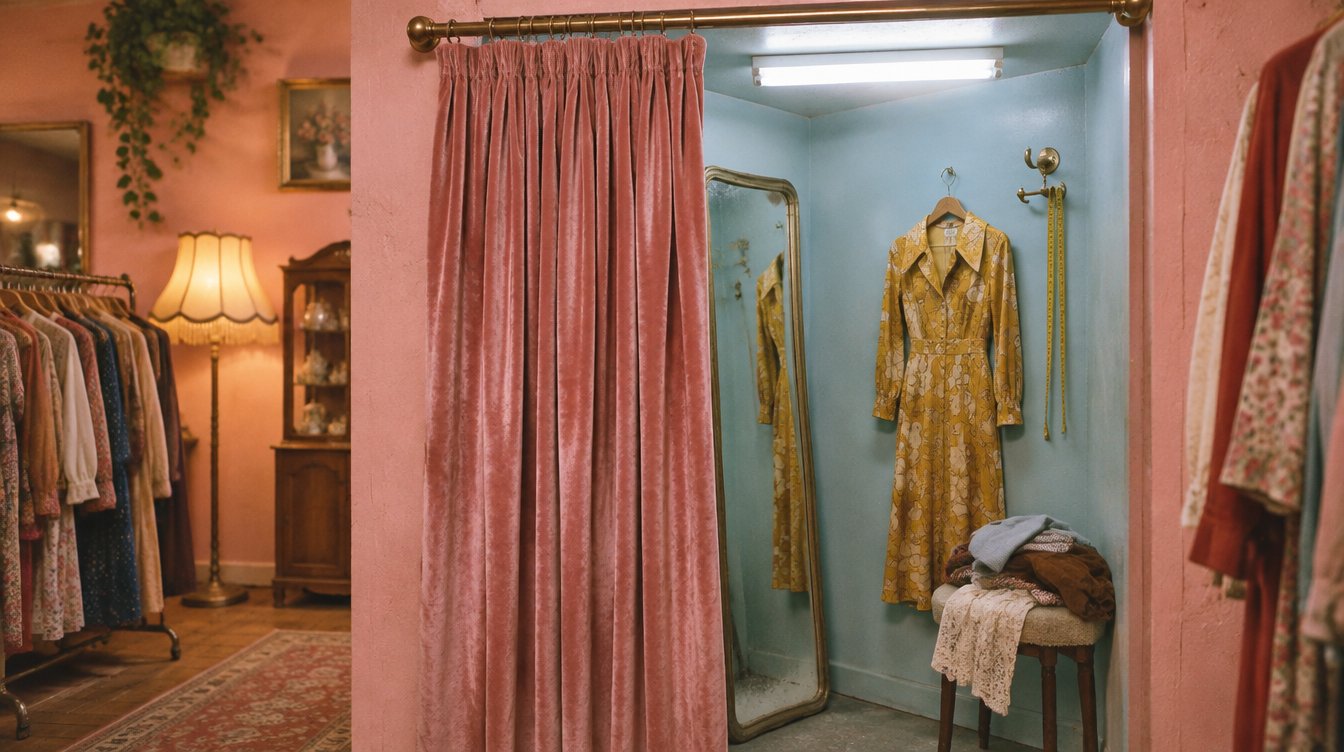
We've all been there. A curtain that doesn't quite close, a 1970s dress marked size 10 that you, a size 6, cannot get past your shoulders, and the slow realization that the mirror in a vintage store is lit like an interrogation room. You put the dress back. You think about it for a week.
Vintage shopping isn't harder than buying new. It runs on different rules, and nobody hands you the rulebook. Since we've already told you to skip Black Friday and buy used, here's the rest of the advice. (The market agrees with us: ThredUp's 2026 resale report puts secondhand apparel at $393 billion worldwide, about a tenth of all clothing spending.)
Ignore the size. Bring a tape measure. American women's sizes have grown for decades. Under the 1971 federal standard, a size 8 meant a 32½-inch bust and a 23½-inch waist; by ASTM's 2011 tables, a size 8 had a bust of about 36 inches. That '70s 8 is closer to a modern 0 or 2. So measure your bust, waist, and hips once, write the numbers in your phone, and measure the garment flat on the counter, then double the width. Men's sizes, built on chest measurement since the military uniforms of the 1800s, drift less, but the rule still holds. Numbers don't lie. Tags do.
Read the label like a detective. Labels date clothes better than sellers do. A fiber-content tag usually means 1960 or later, because the federal textile labeling law took effect that year. A care label points to the early 1970s or later, after the Federal Trade Commission's care-labeling rule of December 1971. The International Ladies' Garment Workers' Union label is the vintage dealer's favorite: the union launched its national label campaign in 1959, and from 1974 the tag went red, white, and blue with "Made in U.S.A." If a "1950s" dress has a tricolor union tag, it was made in the '70s or later. Act surprised.
Check the zipper. Metal zippers dominate older clothes, and nylon coil zippers, invented in 1940, didn't become common until the 1960s. A plastic zipper in a supposedly prewar dress is either a later repair or a later dress.
Know which fabrics are fragile. Acetate, the slippery "artificial silk" first sold in 1919, weakens when wet, hates heat, and dissolves on contact with nail polish remover, so keep your manicure away from that cocktail dress. Rayon loses strength when it's wet, which means a gentle hand wash, never a hot machine. On old leather, look for a powdery, crumbling surface; conservators call it red rot, and there's no reversing it. On wool and fur, check under the collar and cuffs for grazed furrows, clipped hairs, or silky webbing. That's moths, and moths don't stop at one coat.
Deal with the smell. Most vintage smells like its last closet. Costume departments have a trick for clothes that can't go in the wash: the Denver Center for the Performing Arts sprays cheap, clear vodka on the armpits and other trouble spots, and also uses a 50-50 mix of white vinegar and water. Test a hidden seam first, then hang it near an open window.
Know your words. Vintage generally means 20 years or older, and antique means 100. Deadstock means it was never sold, warehoused with its tags and its original creases, which is the closest thing secondhand has to new. And "vintage-inspired" means new, made to look old, priced to look reasonable.
Start here. If you're new to it, buy outerwear first. Coats are forgiving on fit, built heavier than most new ones and easy to judge: check the lining, the pockets and the armpits, and walk away from anything with a moth hole near a seam. Then come back for the leather jacket (we have opinions on how to wear it).
Back in the dressing room, the curtain still won't close. But now you've got a tape measure in your bag and a date on the label, and that size 10 turns out to be a modern 4 with a past. Find the 12. Don't cry.
Keep it loud