Your Best Jacket Did a Tour of Duty First. Here Are Five.
From the trenches of 1914 to Raf Simons in 2001, the coats we fight over in the vintage store all started out in uniform.
Fashion likes to think it invents things. The surplus store knows better. Walk into any army-navy shop and you're standing in the archive every designer quietly borrows from, a rack of coats built for weather, war and work that turned into the most-copied clothes of the century. Ten c, the Italian label run by Alessandro Pungetti, built its whole fall 2026 collection around that idea this week: military shapes, high-tenacity nylon and a finish it calls an "aesthetic of error." It's a good excuse to go back to the originals.
None of these were designed to be cool. That's why they are. Even the Met Gala, which put clothes for work at the center of 2027, would struggle to find a dress code better tested than these.
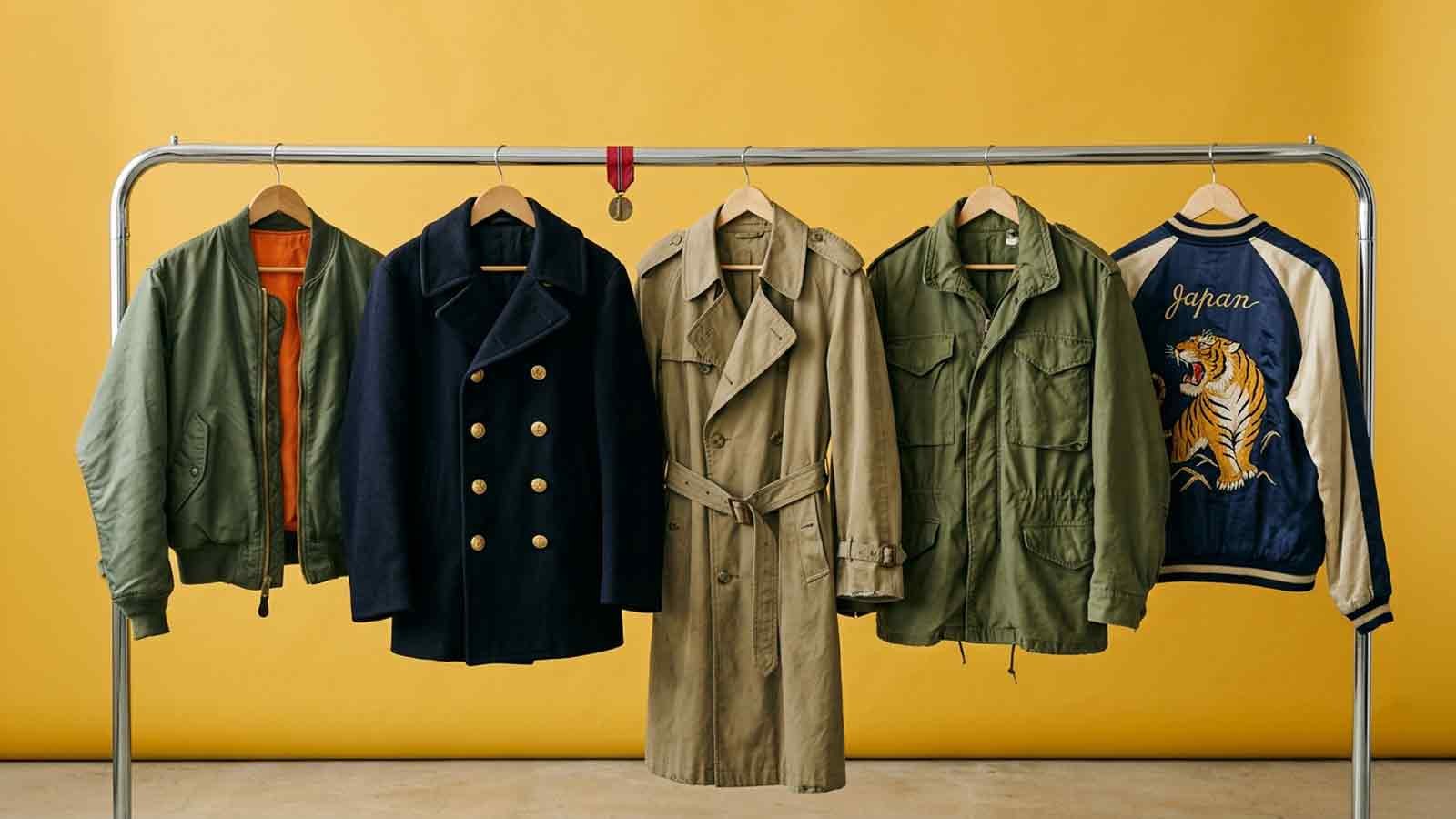
The trench coat (1901 and the First World War). Burberry and Aquascutum have argued about who invented it for over a century, with Aquascutum claiming the 1850s and Thomas Burberry pointing to the gabardine he invented in 1879 and the officer's raincoat he pitched to the War Office in 1901. The soldiers settled the name in the trenches. The straps on the shoulders held rank, and the D-rings held map cases, not grenades, whatever your uncle says. Humphrey Bogart wore one in "Casablanca," and nobody has looked better in the rain since.
The pea coat (U.S. Navy issue since 1897). The name probably comes from the Dutch "pijjekker," a short coat of coarse blue cloth, though the Navy prefers its own theory about "pilot cloth." Double-breasted heavy wool, broad lapels, anchor buttons: brass for officers, black plastic for everyone else. It's the rare uniform with a class system printed on the buttons.
The sukajan (postwar Japan, 1945 to 1952). Kimono makers around the U.S. naval base at Yokosuka, out of work after the war, embroidered satin jackets as souvenirs for American sailors: tigers, dragons, koi, maps of Japan. By the 1960s, local teenagers had claimed them as delinquent wear. Then Ryan Gosling wore a quilted one with a gold scorpion in "Drive" in 2011, the production made 13 copies, and the replicas haven't stopped.
The M-65 field jacket (1965). Alpha Industries designed it for the U.S. Army, with a hood hidden in the collar and Velcro at the cuffs, one of the first mainstream garments to use it. It went to Vietnam, and then home again on the veterans who marched against the war. Travis Bickle wore one in "Taxi Driver" in 1976, with a "King Kong Company" patch that, as far as anyone can tell, belonged to no real unit. The jacket did its own tour of duty in film after that.
The MA-1 flight jacket (the jet age). Nylon flight silk, a knit collar, a blaze-orange lining you could flip out to be seen from the air. English punks and skinheads dyed the bomber burgundy to tell it apart from the military issue, the same crowd behind half the records on our list for people who think they hate punk. Raf Simons put his "Riot, Riot, Riot" MA-1 on a runway in 2001 and the bomber has been high fashion ever since.
Five coats, five wars, zero fashion shows planned. Somewhere a quartermaster is owed a lot of royalties.
Keep it loud