Everybody's a Judge, Nobody's a Student
Reality TV handed America a chair, a vocabulary and a phone number, and we never had to earn any of them. Two decades on, we grade everything and study nothing. Five things to check before you talk passionately about anything.
In this essay
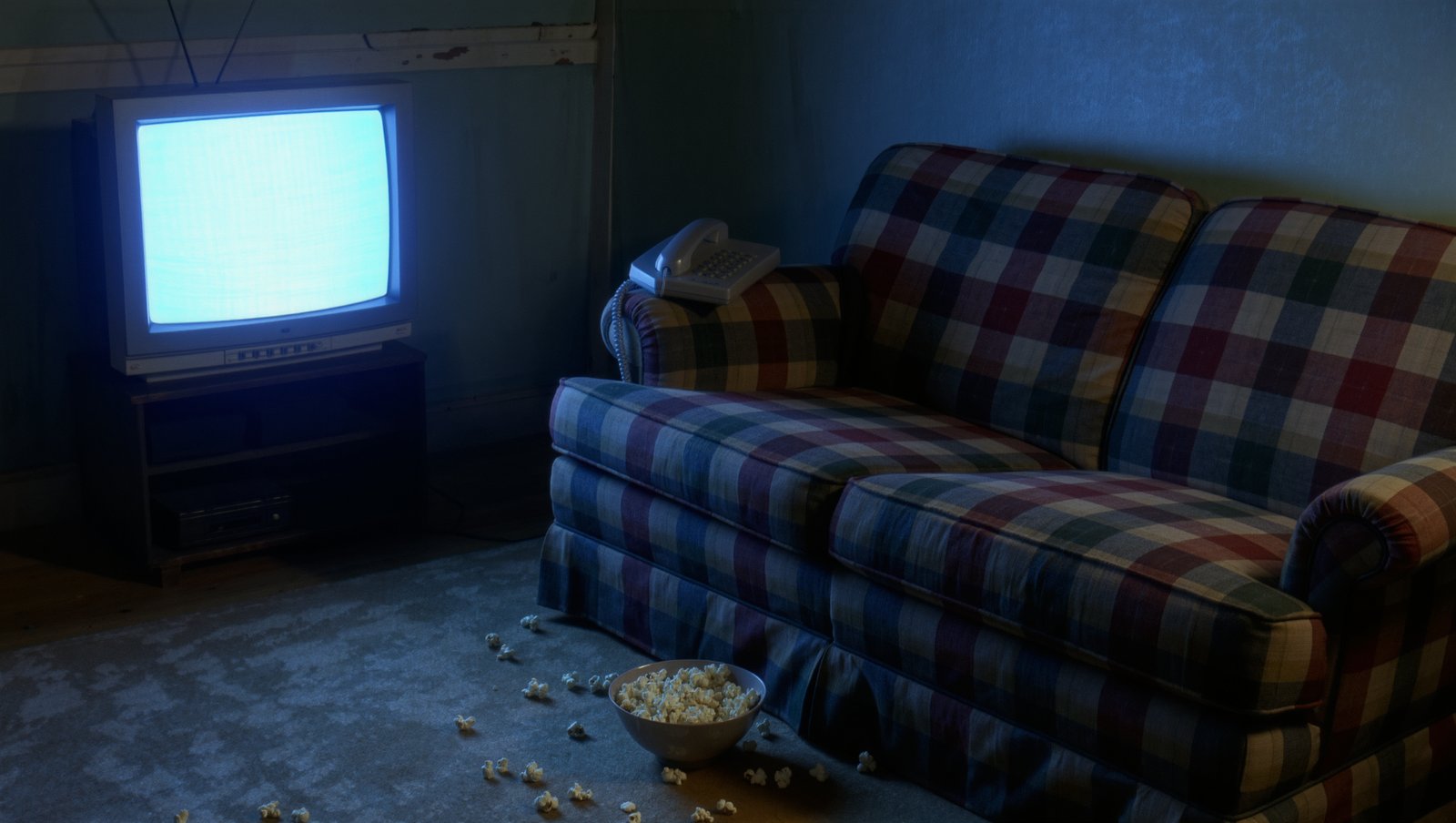
In May 2003, in living rooms from Birmingham to Raleigh, more than 24 million people picked up a phone to settle whether Ruben Studdard or Clay Aiken could sing better, and the answer came down to about 1,350 of them. Somewhere in one of those rooms a person who had never sung in public, who could not have told you what a key was, leaned toward the television and said the word "pitchy." With confidence. For the first time. That was the moment. Not the vote. The word.
We had been practicing for decades. The cliff note came first, out of Lincoln, Nebraska, where a bookseller named Cliff Hillegass began reprinting Canadian study guides in 1958, sixteen Shakespeare plays at a dollar apiece, so that for less than the price of the play you could skip the play and keep the grade. Richard Hofstadter saw the deeper thing a few years later and won a Pulitzer for saying it: Americans had distrusted the expert since before the country had any. By 1985 Neil Postman could sit in front of a television and watch a public learn the way it was entertained, and he wrote the book. So the appetite was old. The delivery system showed up on June 11, 2002, on Fox, with a judges' table and a phone number.
Watch the format with the sound off and you can see the trick. The judges are not there to judge. They are there to teach the living room to judge. Simon says karaoke. Randy says pitchy, dawg. Paula says something kind. By the third week the living room says all three, in that order, and then the number comes up on the screen and the living room votes. Three years later, in June 2005, Dancing with the Stars ran the same play with the paso doble and the Viennese waltz: a technical vocabulary you could pick up in a cold open, a panel to pick it up from, a phone line to use it on. Nobody was ever tested on whether they could hear the pitch. The deal was the vocabulary, the chair and the number, and you did not have to earn any of them.
That was the moment. Not the vote. The word.
Then the chair left the living room
It went to Rotten Tomatoes, where a film is a percentage, and to Yelp, where a restaurant is a star, and to the comments and the quote-tweet, where everything is a verdict and nothing is a question. It went to the runway, which is our beat, where all of us have typed "the house codes" at 2 a.m. without ever having sewn a dart. It went to medicine in the second weekend of the pandemic, when the country enrolled itself in a school of epidemiology with no classes. It went into a 72-page report in May 2025, the Make America Healthy Again commission's case against chronic disease, with more than 500 footnotes, seven of which, the outlet NOTUS found, pointed to studies that did not appear to exist; one of the named authors said she had never written the paper credited to her, and the White House said the report would be updated. Think of that document as the whole thesis in a binder: the full costume of expertise, 500 footnotes, and nobody in the sixth minute reading them.
It went to school, where the share of American children taught at home has roughly doubled since the pandemic, to around 6 percent, and was still growing about 5 percent a year by Johns Hopkins' count. Some of those parents are the most serious students in this story. Others watched a classroom for a year through a laptop and concluded they could run one, with a curriculum chosen the way we choose a restaurant.
And this week it went to Congress. On Nov. 3 Democrats took both chambers, and Texas, our state, sent James Talarico to the Senate and Gina Hinojosa to the governor's mansion, the first Democrats in either job since the 1980s and the 1990s. Within three days a petition to keep Hakeem Jeffries from the Speaker's chair had nearly 900,000 signatures, a second one against Chuck Schumer as majority leader cleared 100,000 in a day, and at least six incoming senators said they would not vote for him. Reasonable people hold every possible view of that, and ours is not the point. The point is a quiz. Which of those two jobs is in the Constitution? Who votes for the Speaker? What does a majority leader actually control? Do not look it up yet.
Why the sixth minute feels optional
In 2002, the same year Idol arrived, two Yale psychologists, Leonid Rozenblit and Frank Keil, worked out why skipping the sixth minute feels so good. They asked people to rate how well they understood ordinary objects, a zipper, a flush toilet, a helicopter, and the ratings came back high. Then they asked for the mechanism, step by step, and the ratings collapsed. They called it the illusion of explanatory depth, and it is the engine under the chair: familiarity feels exactly like understanding right up until someone asks how the thing works. Nine years later three psychologists, Betsy Sparrow, Jenny Liu and Daniel Wegner, published a study in the journal Science with a title that did the explaining for them, “Google Effects on Memory: Cognitive Consequences of Having Information at Our Fingertips,” and found that when we expect information to stay available we remember it worse and remember where to find it better. The cliff note had moved into the phone, and the mind reorganized itself around the index. Knowing where to look now feels like knowing.
Knowing where to look now feels like knowing.
What the tests started to say
For most of the 20th century each generation outscored the last on intelligence tests, about three points a decade, and the tests have started to say something else. In Norway, where every young man sits the same exam for military service, researchers went through 730,000 results and found the rise stalled for people born after the mid-1970s and then fell, about seven points a generation, and the drop showed up between brothers, which rules out most of the comfortable explanations. In the United States, a 2023 study of nearly 400,000 adults tested between 2006 and 2018 found verbal reasoning, matrix reasoning and number series all down, at every age and every level of education. One thing went up: turning a shape around in your head. A generation raised on screens got better at precisely one task. Its authors warned against the easy headline, since a falling score is not a falling mind and nobody has proved a cause, and that warning belongs in the piece. So does this: it is the first generation the tests cannot show getting smarter, and the first one raised entirely in the chair.
What this is not
"Trust the experts" is its own cliff note, so we are not saying it, and the experts have earned a fair share of the suspicion: Iraq, 2008, a pandemic whose official advice reversed itself on camera. Distrusting an expert is a reason to learn more. It is not a license to learn less. Nor are we telling amateurs to be quiet. This magazine is written by amateurs who kept going, and every obsession starts as a crash course; the Idol living room sent real people to real voice lessons, and some of them can hear the pitch now. The target is not the start. It is the stop.
The untaught genius
Most people who quit learning do not say "I already know this." They say something gentler: "If I take the lessons, I'll lose what makes it mine." That is the oldest story in the arts, the genius who was never taught, and it is hard to find it true of anyone we actually admire. The Antwerp Six, who looked in 1986 like they had torn up every rule in fashion, were trained in a classical department at the Royal Academy in Antwerp by a painter who ran it like a Paris atelier. The painters we call naturals mostly spent years copying other painters. The singers who sound rawest have usually practiced the most. Perhaps what people are really afraid of is the middle stretch, because training tends to make your work worse before it makes it better; the old habits come apart before the new ones hold. That may be where a lot of us quit, and afterward some of us call the quitting integrity. The five-minute course does not only leave us wrong about things. It tells us the sixth minute would cost us ourselves.
We never took the sixth minute.
The answers
The answers, since you waited. The Speaker is the one of the two jobs the Constitution mentions. The whole House elects the Speaker, 218 votes when the new Congress sits on Jan. 3, and the Speaker stands second in line to the presidency and decides what reaches the floor, which is why every faction's grievance lands on that desk and why exactly one Speaker in the country's history, James K. Polk, ever went on to the White House. The majority leader is not in the Constitution at all. It is a party job, chosen in a secret vote of the caucus, roughly 29 senators this time, and it controls the Senate's calendar, which under the filibuster means controlling what can even be attempted. Notice what the two jobs have in common. Neither is won by voters. Both are won by colleagues, which makes them a particular kind of work for a particular kind of person: someone who knows what each of 218 people needs, what they will trade for it, and which promises will still hold in March. The deals are made in those two offices and in the committee seats they hand out, by counting, over years of relationships nobody sees. It is the job everyone needs and nobody loves, and the petition is asking for a fighter where the job rewards a counter. That may be exactly the trade people want. They should know they are making it. If you knew all that, good. Keep your opinion. If you did not, you may keep it too. You only have to call it what it was, which was a vote.
The petition is asking for a fighter where the job rewards a counter.
Five things to check before you talk passionately about anything
They work on a runway show, a restaurant, a record, a diet, a school and a Speaker's race, and we have failed every one of them this year.
- Try the zipper. Explain the thing to yourself in steps before you explain it to anyone else. How does a dart shape a bodice? What does a Speaker actually control? What is pitchy, in the ear and not the word? If you cannot get past step two, you have a feeling, not a view. Feelings are allowed. Label them.
- Trace the word. Every technical term you are about to use came from somewhere. Who taught you "house codes," "ultra-processed," "paso doble," "the filibuster"? If the answer is a judge on television or a thread, you are quoting, not knowing. Quoting is fine. Say so.
- Name what would change your mind. One sentence, before you post. If the answer is nothing, it is not an opinion. It is a vote, and you are the phone line.
- Ask the person who did the work one question. Not the pundit. The pattern cutter, the nurse, the sound engineer, the teacher, the staffer who counts the votes. Then notice how much of your view survives the answer. Usually some of it does, and that part is finally yours.
- Take the sixth minute. Pick one thing this year and go past the crash course: the lesson, the whole record, the book, the bill, the pattern. Not to become an expert. To find out how much you did not know, which is the one thing the five-minute course can never teach, because it is the thing it exists to hide.
Back in the living room
Back in that living room in 2003 there is a person leaning toward the screen, saying "pitchy" for the first time. She was not wrong. The note was flat; the judge said so, and she heard it, a little, once he did. She had the word and the chair and the number, and she used all three before the song was over. She could still take the lesson. So could we. The number is on the screen either way.
Keep it loud