The Great Rock Clubs Closed. One's a Church Now. One's Getting a Froyo Shop.
Six legendary rooms, what happened on their stages and what stands there today. Bring flowers, or a spoon.

You know the feeling. You're walking somewhere ordinary, a bank, a hotel lobby, an apartment block with a nice gym, and someone tells you that Hendrix set his guitar on fire right about where you're standing. The building doesn't care. It has a lease to think about.
We sent you to the rock clubs still worth the plane ticket earlier this month. This is the sequel nobody asked for: the rooms that didn't make it, and the strange second lives of the addresses. Rock and roll has always been a tenant. Here's who moved in.
Fillmore East, New York (1968 to 1971). Bill Graham's East Village hall lasted barely three years, yet still produced two great live albums: Jimi Hendrix's "Band of Gypsys," recorded across New Year's Eve 1969, and the Allman Brothers' "At Fillmore East," cut in March 1971. Graham shut it that June, blaming the move to arenas. The auditorium became the Saint, a legendary gay club, in 1980, and was later torn down for apartments; the lobby building at 105 Second Ave. became a bank. The bank left in 2024. This year the owner of the 16 Handles frozen yogurt chain bought the space, and a 16 Handles is on the way. Duane Allman, meet toppings bar.
The Rat, Boston (1970s to 1997). The Rathskeller in Kenmore Square was a basement in every sense, and Talking Heads, the Police, and the Ramones all came through it. It closed in November 1997 with Gang Green on stage, and the building came down in 2000. The Hotel Commonwealth stands there now, and in 2014 it opened the Rathskeller Suite, decorated with Rat memorabilia, including a dressing-room mirror still covered in band stickers. You can sleep where the Ramones sweated, for several hundred dollars a night.
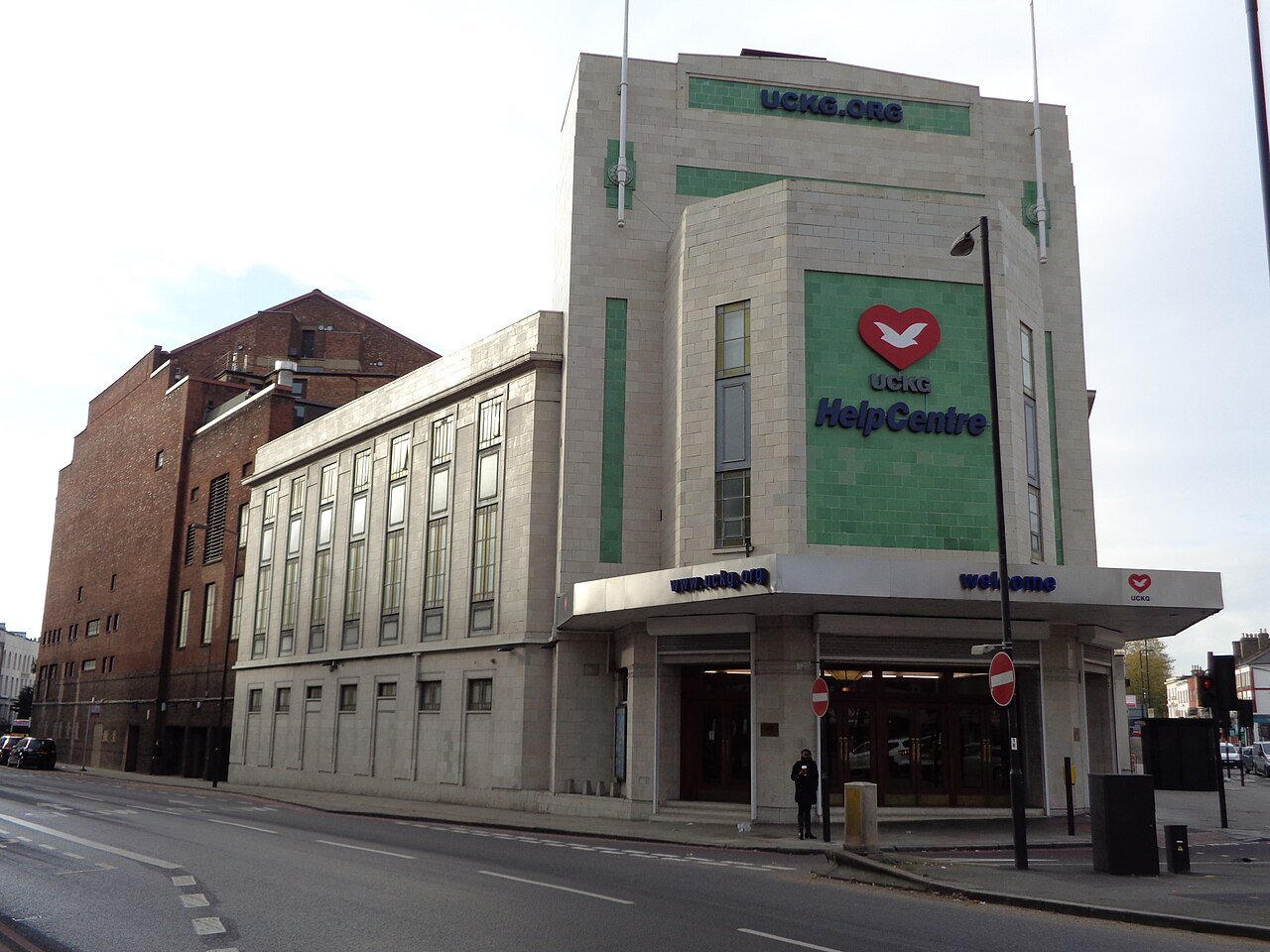
Rainbow Theatre, London (as the Rainbow, 1971 to 1982). Before it was the Rainbow, it was the Finsbury Park Astoria, where Hendrix first set his Stratocaster alight on March 31, 1967. As the Rainbow, it hosted the Who's opening show in November 1971, Frank Zappa's fall from the stage that December (an audience member pushed him; he broke a leg), Eric Clapton's 1973 comeback, and four Bob Marley nights in June 1977. It closed in 1982, and since 1995 the listed building has belonged to the Universal Church of the Kingdom of God. Different hymns, same acoustics.
The Haçienda, Manchester (1982 to 1997). Factory Records gave its club a catalog number, FAC 51, which tells you how seriously everyone took the joke. Madonna played her first UK show there in January 1984, and by 1988 the acid house nights had turned it into the center of Madchester. It lost money for most of its life because people on ecstasy drink water, not beer, and closed in 1997 after years of violence and licensing fights. It was demolished in 2002. The apartments that replaced it are called the Haçienda, with the name licensed from New Order's Peter Hook. You can rent the shrine.
CBGB, New York (1973 to 2006). Television played 315 Bowery in April 1974 with Patti Smith in the crowd, the Ramones arrived that August, and Smith played the club's last show on Oct. 15, 2006, after a rent fight with the landlord. Since 2008, the address has been a John Varvatos store, with the club's old walls kept behind glass like ancient graffiti. It's the most famous before-and-after in rock, and it still stings, though at least the store kept the walls.
Winterland, San Francisco (as a concert hall, 1966 to 1978). An old ice rink that Bill Graham turned into a ballroom, Winterland hosted the Band's "The Last Waltz" on Thanksgiving 1976 and the Sex Pistols' final show on Jan. 14, 1978, when Johnny Rotten asked the crowd whether they ever felt cheated. The Grateful Dead closed it on New Year's Eve 1978, and it was demolished in 1985 to make way for apartments. The complex at 2000 Post St. still mentions the concert hall in its marketing. Somebody in leasing reads liner notes.
Go visit anyway. Stand outside the yogurt shop, or the church, or the suite with the sticker mirror, and listen hard. The building won't tell you anything. You'll hear it regardless.
Keep it loud