Build a Record Collection Without Going Broke. Start in the Dollar Bin.
Record Store Day's Black Friday drop is Nov. 27. Here's how to come home with records you'll play, and money left for the bus.
Every collector remembers the first record they overpaid for. Ours was a reissue in a shrink-wrapped sleeve with a sticker promising 180 grams, and it sounded exactly like the copy in the bargain bin that cost a fraction as much, except the bargain copy had someone's name written on the back in ballpoint, which is better. That's the whole lesson. The rest is detail.
The detail matters this month. Record Store Day started in April 2008, when about 300 independent U.S. shops signed on, and by 2010 it had grown to roughly 1,400 stores and added a Black Friday edition. This year's lands Nov. 27, with limited pressings from the Ramones to Prince. Some of them are worth a queue. Most are worth a look and a shrug.
Buy what you'll play on a Tuesday. A collection is not an investment portfolio, and the best ones are built from records that wear out. Start with five albums you already love, then follow the threads: the producer, the label, the band the singer was in before. That's how you go from one record to a shelf, as our guide to punk records for people who think they hate punk tries to show.
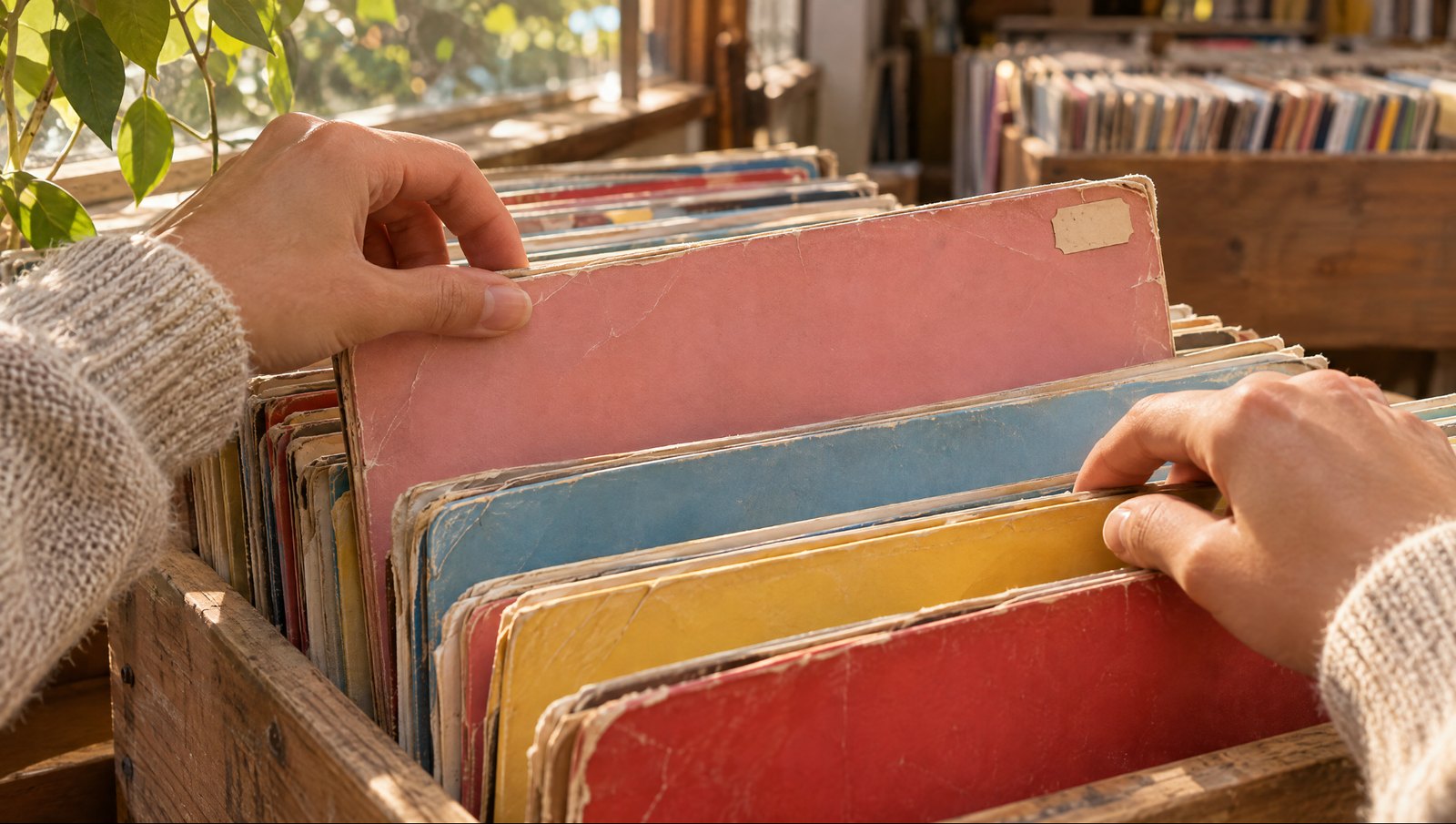
Dig the cheap crates first. The dollar bin, the "under five" box, the crate on the floor nobody has the knees for. Prices there aren't set by rarity; they're set by somebody wanting the shelf space. Soundtracks, cast recordings and 1980s major-label pop go cheap and often sound great.
Learn the grades. Most shops and Discogs sellers use the same ladder: Mint, Near Mint, Very Good Plus, Very Good, Good and down from there. Very Good Plus is the collector's sweet spot, played but loved. Anything below Very Good, buy for the music only, never for the sleeve.
Look before you pay. Pull the record out of the sleeve, under the shop's light. Tilt it. Light scuffs are cosmetic; a scratch you can catch with a fingernail will click. Sight along the edge for warps. Check the inner sleeve for mold, and the label for the matching title, because records wander.
Buy used for the music, new for the extras. A new reissue earns its price when it adds something: unreleased tracks, a better mastering, liner notes, a band's own say in it. If it's the same album on heavier vinyl, the used copy wins. Heavier is not the same as better.
Pick your Black Friday battles. Read the list before Nov. 27, choose one or two titles you'll play, and go early to the shop you want to keep in business. Then ignore the rest. Limited editions come back on the secondhand market every year, and patience is cheaper than a 7 a.m. line.
Start here. Walk into an independent shop this week with a small budget and a rule: one record you know, one you don't. Ask the person behind the counter what they'd play right now. Shop staff have been building collections like ours for decades, and the advice is free.
Then go home and write your name on the back in ballpoint. Somebody will thank you in 2060.
Keep it loud