Talent Is Everywhere. Plane Tickets Aren't.
Nepo babies, a $10,000 camera, a shark in a tank and a nanny with 100,000 negatives. What it really costs to be called an artist.

I remember walking through a photography exhibit and feeling nothing about the photographs.
The subject was fascinating. The photographer had spent a month living with a tribe in Africa, and the walls were full of faces, rituals and landscapes most of us will never stand in front of. The pictures themselves were fine. Pretty. Sharp. The kind of thing you'd get if you handed a good camera to anyone with a decent eye and a month to spare.
That last part followed me home.
A month to spare.
Who gets a month to spare? Who has the plane ticket, the time off, the lenses, the insurance on the lenses and a life at home that doesn't fall apart while they're gone? I thought I was looking at someone's talent. I was looking at their itinerary.

I'm calling it "a tribe in Africa" because that's all I remember, which tells you everything. I remember the trip. I don't remember the people.
I thought I was looking at someone's talent. I was looking at their itinerary.

The nepo babies have a point. Just not the one they think.
In December 2022, New York magazine put a nursery full of famous children on its cover and called it "The Year of the Nepo Baby." Vulture's Nate Jones built a whole taxonomy of Hollywood families around it and counted eight famous offspring in Quentin Tarantino's "Once Upon a Time in Hollywood" alone. That isn't a cast. That's a family reunion.
The defense came fast, and it was always the same: they have talent. And plenty of them do.

But talent was never the argument. The argument is everything that happens before anyone sees your talent. The acting lessons at 9. The summers on a parent's set, learning where to stand and when to stay quiet. A dinner table where directors are just people who eat too much bread. Knowing, at 19, that an audition is a conversation and not a trial. None of that is talent. All of it shows up on screen looking exactly like talent.
Calling that a level playing field is like bragging about your marathon time when you started at mile 20.

It was never only Hollywood
Actors just got the hashtag. The rest of the arts have the same problem with better lighting.
In 2018, a team of British sociologists published "Panic! Social Class, Taste and Inequalities in the Creative Industries," one of the first serious studies of who actually gets to work in culture. About a third of the U.K. workforce comes from working-class homes. In music, the performing arts and the visual arts, the figure was 18.2%. In film, TV, radio and photography, 12.4%. And the best-paid people at the top were the most likely to say the system rewards talent and hard work.
Of course they were. Nobody sees their own head start. You only see the finish line.
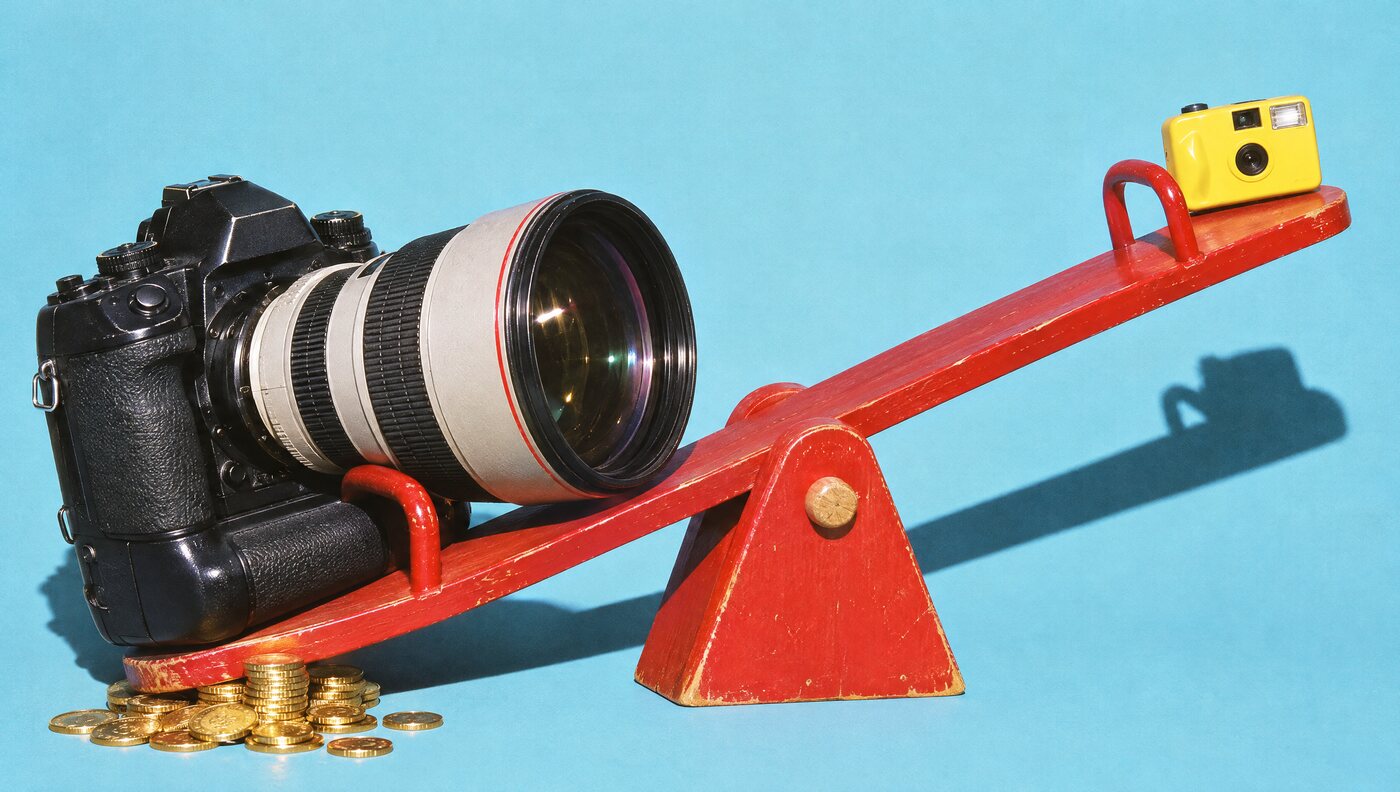
Then there's the gear. Photographers love to say the camera doesn't matter, usually while holding one that costs more than a used car. Someone shooting on a $10,000 camera and someone shooting on a $500 one aren't making the same pictures. The expensive camera doesn't give you an eye. It gives you second chances: the shot in near darkness, the shot from across the field, the frame you can crop in half and still print the size of a wall. On the cheap one, you get the shot or you don't.
Add the plane ticket and the month off, and some of what hangs in galleries is a bank statement in a frame.
So is this new?
I keep wondering if this is a recent problem, something the last decade invented along with the ring light. It isn't. The Panic! researchers went back through decades of census data and found that young people from upper-middle-class homes were overrepresented in creative jobs, and that the gap didn't budge between 1981 and 2011. Their verdict was blunt: there was no golden age.
The nepo baby isn't new. The hashtag is.
The nepo baby isn't new. The hashtag is.
What has always existed, right next to the head start, is the outsider who got in anyway. Rock history is full of them, and full of the ones it forgot, like Tina Bell, the woman grunge forgot. The art world has its own.
Jean-Michel Basquiat left his family's Brooklyn home as a teenager, crashed in parks and on friends' floors, and sold hand-painted postcards and T-shirts on the street. With a friend, he spray-painted cryptic lines signed SAMO all over SoHo, which happened to be the neighborhood full of the galleries he needed to notice him. He once tried to sell Andy Warhol a postcard at a SoHo restaurant. In June 1980, he showed in the Times Square Show, a do-it-yourself exhibition in an abandoned massage parlor off Seventh Avenue.
Nobody handed him the room. He wrote on the door until somebody opened it.
Vivian Maier never even knocked. She worked as a nanny in and around Chicago for about 40 years and took photographs the entire time, leaving well over 100,000 negatives that almost nobody saw. In 2007, her storage locker went to auction over unpaid rent, and a young real estate agent named John Maloof bought a box of her negatives for about $380. She died in 2009. Her first exhibition opened in Chicago in 2011.
She had the eye her whole life. She never had the room.
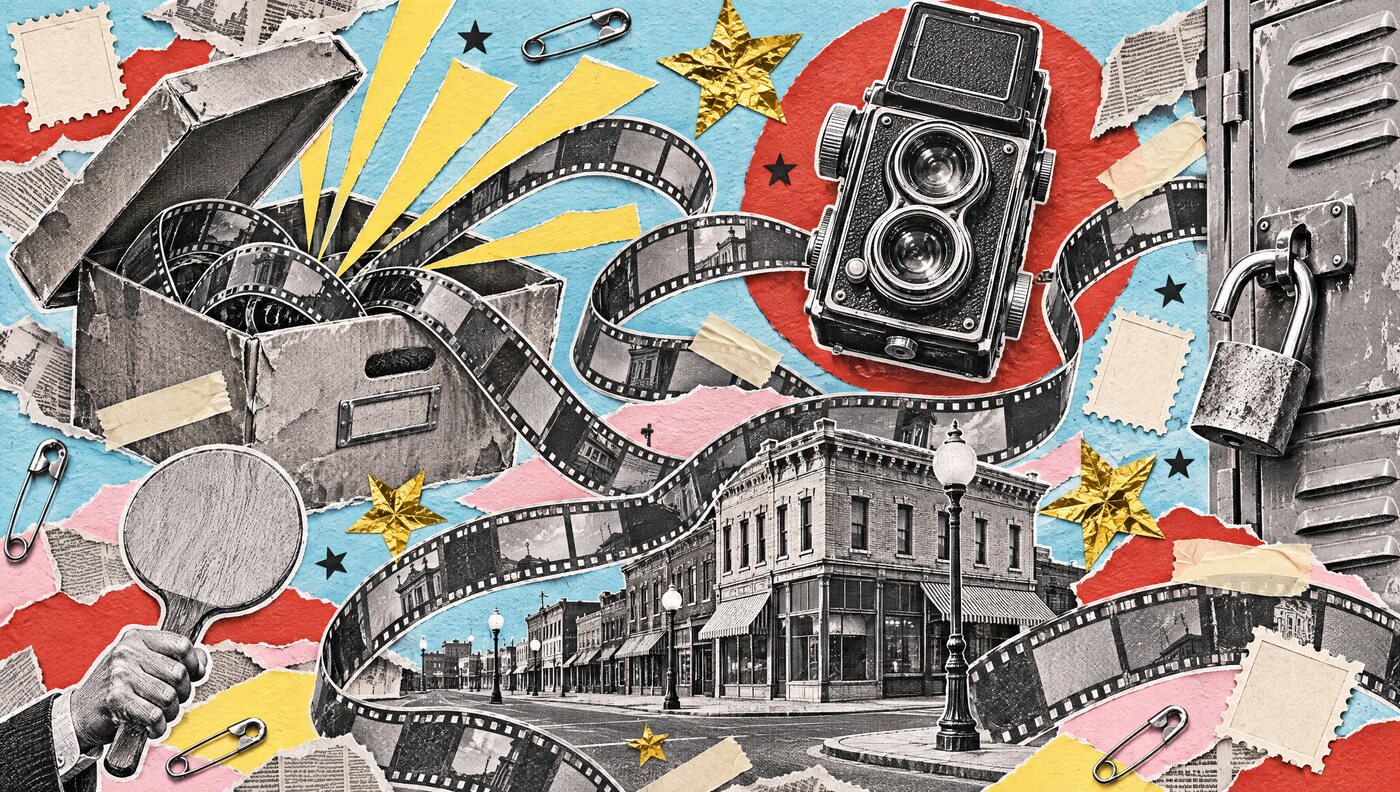
That's the part the "talent always wins" crowd skips. Talent didn't win for Maier. A storage auction did, and she was gone before anyone said her name out loud.

Then there's Damien
If Basquiat is the outsider who kicked the door in, Damien Hirst is the one who kicked it in and then bought the building.
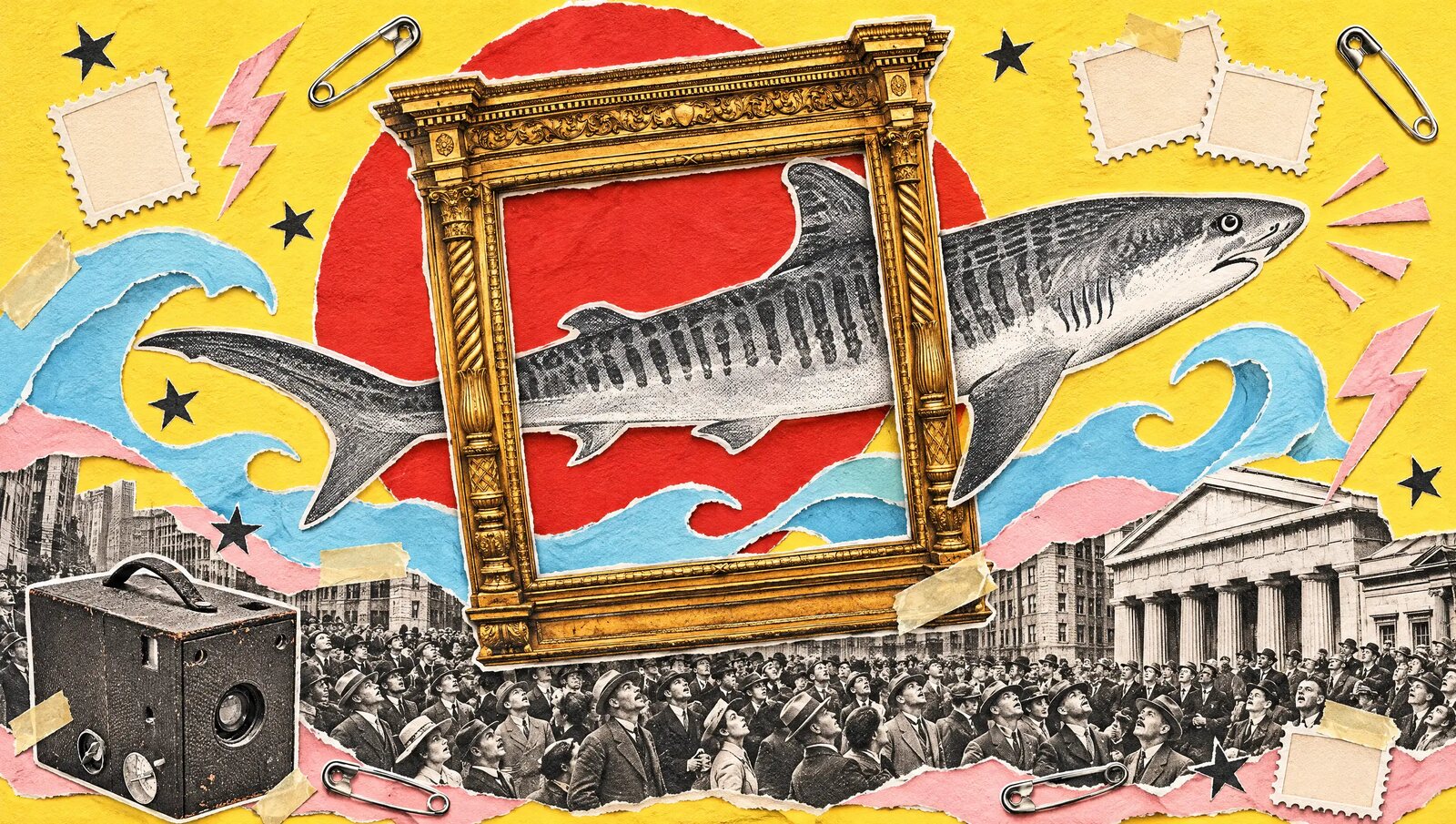
He wasn't born into it. He grew up in Leeds, where his mother worked for Citizens Advice and his stepfather was reportedly a mechanic. In 1988, in his second year at Goldsmiths, he organized a student show called "Freeze" in an empty Port Authority building in London's Docklands. Charles Saatchi, the advertising man and collector, took notice. By 1991, Saatchi had offered to pay for whatever Hirst wanted to make, and Hirst wanted a shark. The shark cost £6,000. The finished piece, a tiger shark in formaldehyde titled "The Physical Impossibility of Death in the Mind of Someone Living," cost about £50,000.
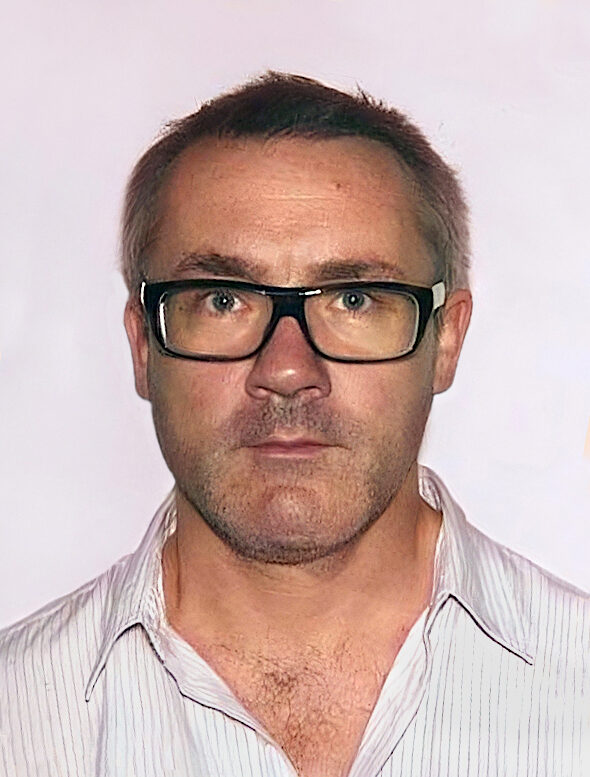
In 2004, Saatchi sold it to hedge fund manager Steve Cohen, reportedly for at least $8 million. A top deputy in the U.S. attorney's office that later went after Cohen's fund once joked that he wanted the pickled shark for his own office. Even the feds had taste.

So I'll give Hirst this much: he made his own access before anyone made it for him. "Freeze" was a student hustle in a vacant building. That's punk.
Then the access got very, very big. In September 2008, Hirst skipped his own galleries and sent more than 200 new works straight to auction at Sotheby's in a sale called "Beautiful Inside My Head Forever." It brought in £111 million over two days. The first night, Sept. 15, was the same day Lehman Brothers filed for bankruptcy.
The economy fell down the stairs. The shark sold anyway.
Ten years later, Artnet tracked the pieces from that sale that had come back to auction. Most had lost value.
The shark went to Wall Street
"Billions," the Showtime drama, loosely based its hedge fund king, Bobby "Axe" Axelrod, on Cohen, among others. (Damian Lewis, who played him, has said Axe isn't based on any one real person.) The show's production designer, Michael Shaw, wanted a blue-chip collection that would intimidate anyone who walked into Axe's office, and he had one rule for the wall: "It has to be a Basquiat."
Remember the kid with the postcards? A skull painting he made in 1982, at 22, was bought in 1984 for $19,000. In 2017, it sold at Sotheby's for $110.5 million. Basquiat died in 1988. He was 27.
None of that $110.5 million went to the kid who sold postcards in SoHo.
None of that $110.5 million went to the kid who sold postcards in SoHo.
That's what happens when art becomes an asset. The work stops being something you look at and starts being something you hold. The question in the room changes from "Is this good?" to "Will this be worth more?" And the people answering it aren't critics or other artists. They're buyers.

I'm not saying anyone's favorite painting is a laundromat. But in 2020, a U.S. Senate subcommittee called the art business the largest legal, unregulated industry in the country, and reported that two sanctioned Russian billionaires, Arkady and Boris Rotenberg, had moved more than $91 million through shell companies after they were sanctioned, including money spent on art. Banks have to know who their customers are. As of that report, American art dealers weren't held to the same rule. Europe already required identity checks on art sales of €10,000 or more.
When a painting can do that, it isn't only a painting anymore. It's a place to keep money. And when art is a place to keep money, the artists who get made are the ones somebody with money decided to keep.
Borrowed amps and three chords
Here's the case against everything I just said, and it's a good one. Access doesn't make the art. Plenty of rich kids with beautiful cameras make boring pictures. Plenty of the music I love was made by people with borrowed amps and three chords, because three chords were all they could afford. Constraint is a style. Punk is the proof. "Freeze" was in an empty building. The Times Square Show was in a massage parlor.
But "build your own room" is a lot to ask of everyone who wasn't born in one. Maier never got to. Bell got written out of the room she helped build.
So what I want is smaller, and harder. I've complained that everybody's a judge and nobody's a student. Here's the student move: before you're impressed, ask what you're impressed by. These are the questions I'm taking to the next gallery.
- Would this be on the wall if someone without the plane ticket had made it?
- Am I moved by the picture, or by the story about the trip?
- Who in this picture got paid?
- Who decided this was art: a critic, an artist or a buyer?
I think about that exhibit more than I think about most good ones. The faces were real. The place was real. The trip was real.
The art was a month off.
Keep it loud